Florida’s climate can be tough on pavers. Here are seven common problems—and what can be done about them.
Florida’s intense sunshine, heavy rain, humidity, and irrigation systems can be hard on outdoor pavers. Over time, driveways, patios, walkways, and pool decks may begin to look faded, stained, uneven, or neglected.
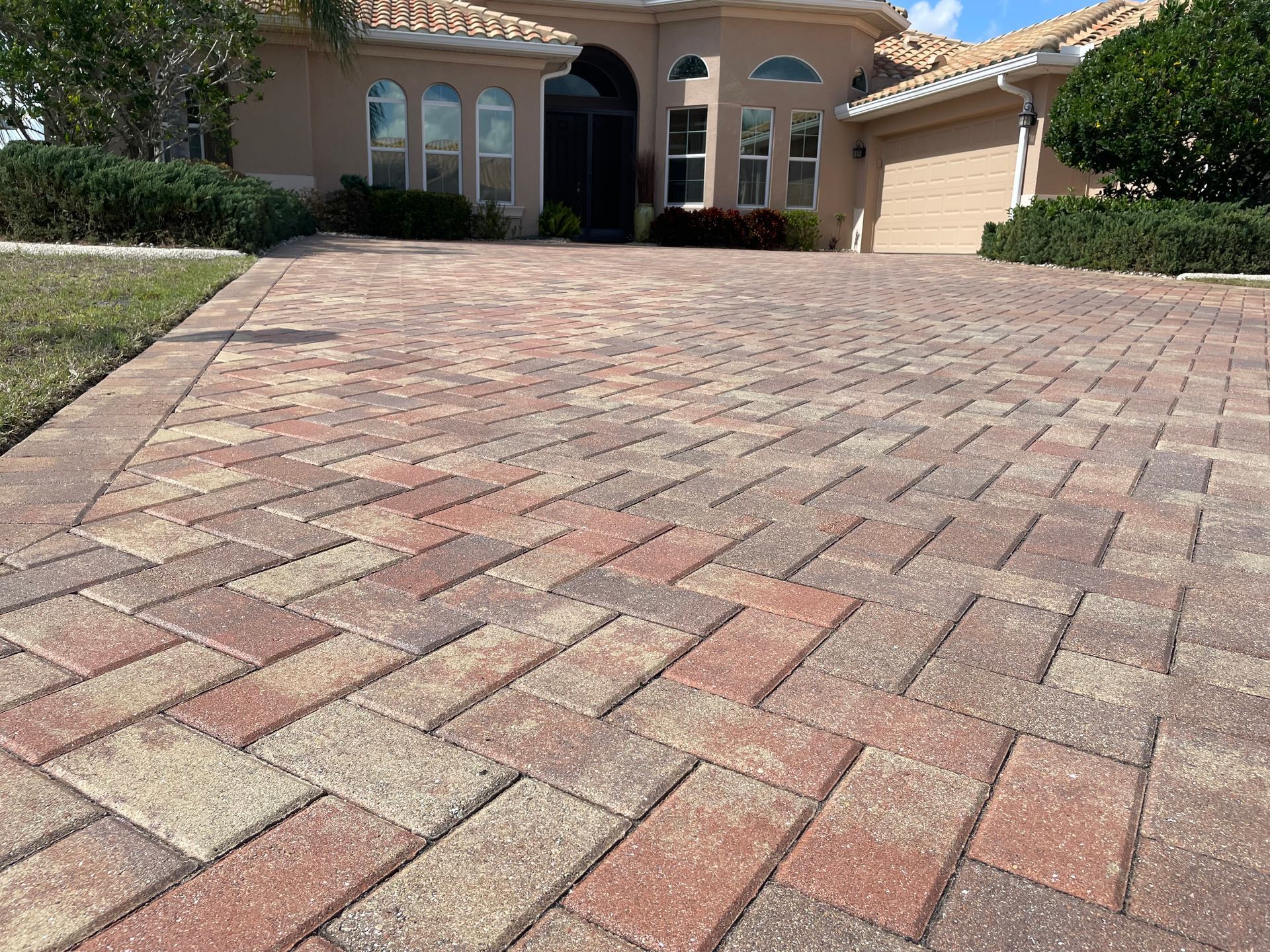
The good news is that many common paver problems can be corrected through professional cleaning, repairs, joint re-sanding, sealing, tinting, or failed-sealer removal.
Here are seven of the most common paver problems we encounter in the Tampa Bay area—and what can be done about them.
1. Weeds, Moss, and Algae Between Pavers
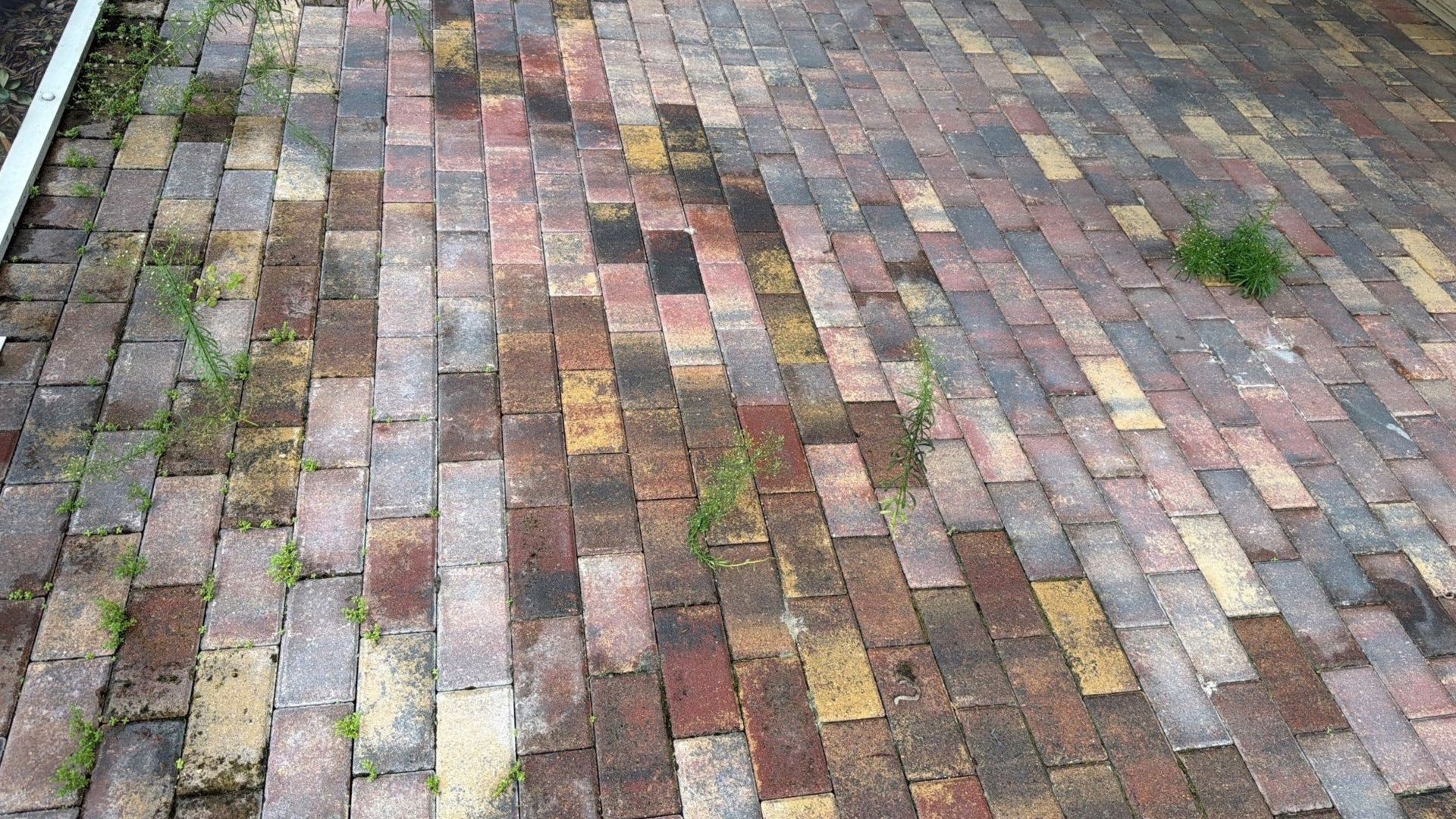
Florida’s warm, humid climate creates ideal conditions for weeds, moss, and algae. Organic material can collect in the joints between pavers, allowing unwanted growth to take hold.
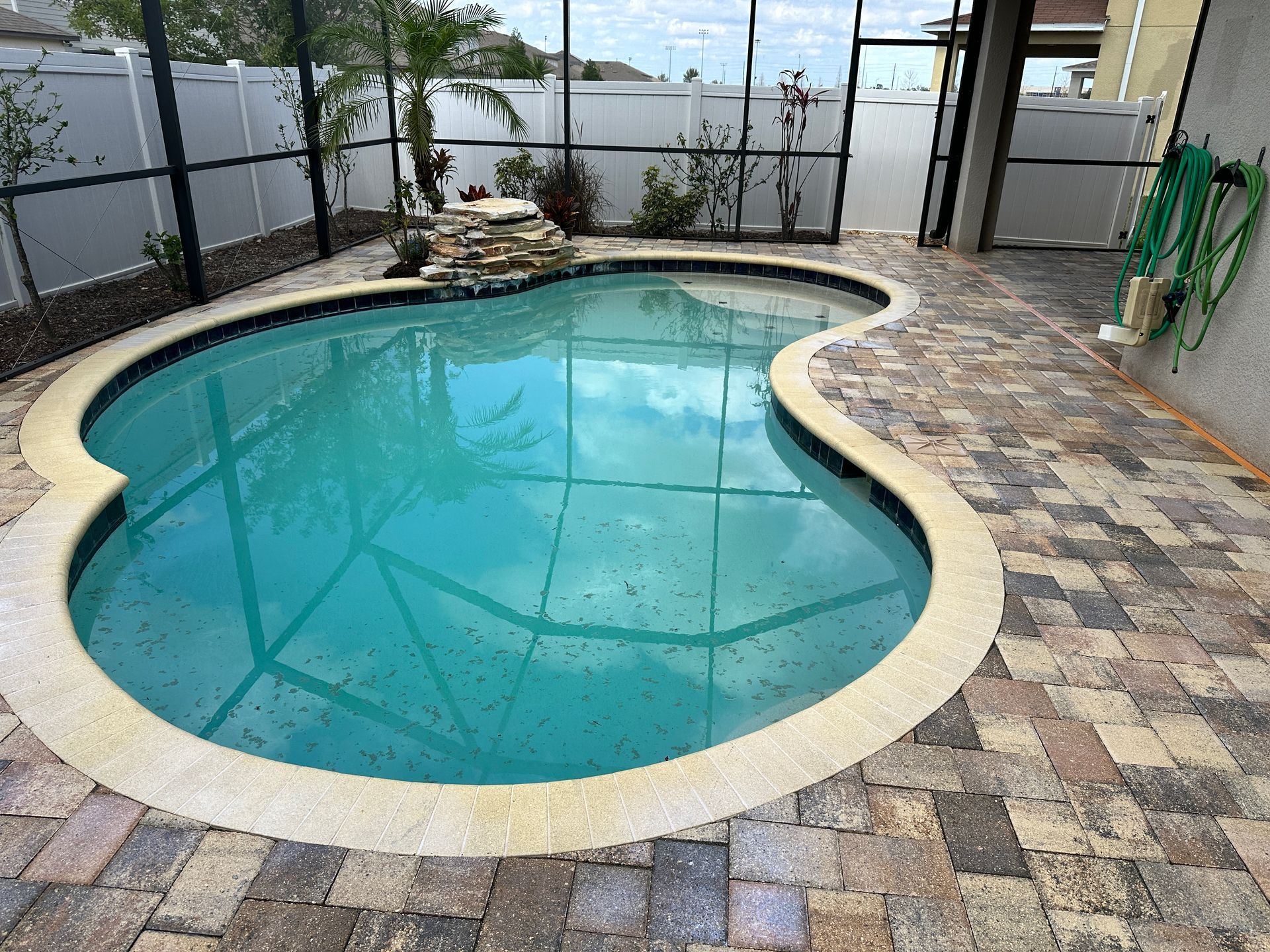
Shaded pool decks and patios are especially susceptible to algae, while driveways commonly develop weeds in areas where joint sand has deteriorated.
How to address it
A professional restoration service can include:
- Deep cleaning to remove existing weeds, algae, dirt, and organic buildup
- Cleaning the joints between the pavers
- Installing fresh joint sand where needed
- Applying paver sealer to help stabilize the joint sand and make future maintenance easier
Although sanding and sealing can help reduce weed growth, no treatment can guarantee that weeds will never return. Regular sweeping and occasional maintenance remain important.
2. Faded or Dull-Looking Pavers
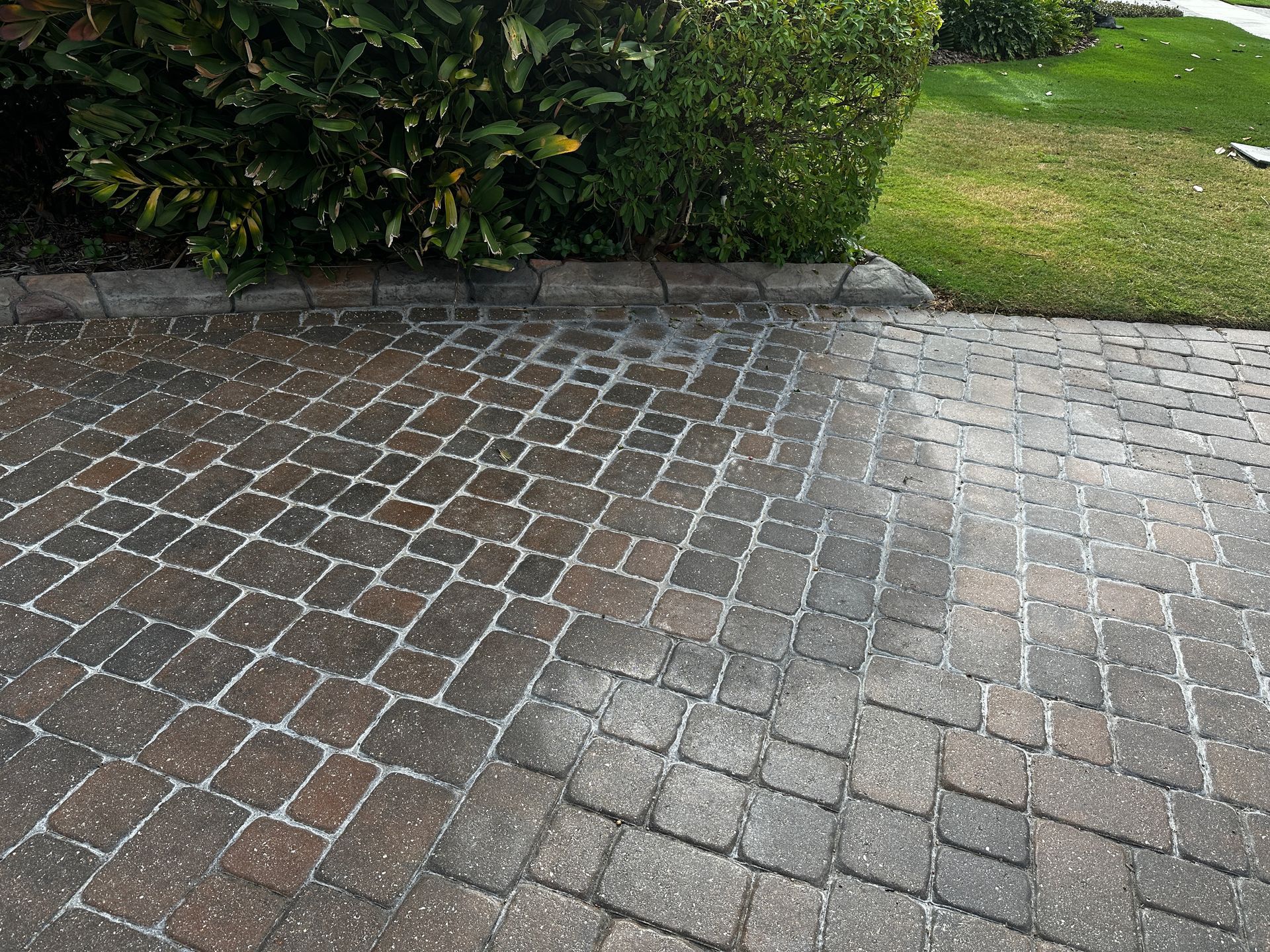
Florida’s strong ultraviolet exposure can gradually fade the appearance of concrete pavers. Dirt, weathering, deteriorated sealer, and mineral deposits can also leave the surface looking pale or lifeless.
Some pavers regain much of their original appearance after professional cleaning and sealing. Severely faded pavers may benefit from a professional tinting treatment before they are sealed.
How to address it
Depending on the condition of the surface, restoration may involve:
- Professional deep cleaning
- Removal of surface contamination
- Paver tinting to improve faded or inconsistent color
- Application of a professional-grade paver sealer
A proper evaluation is important because faded pavers, worn sealer, and sealer failure can look similar but may require different solutions.
3. Uneven, Sunken, or Loose Pavers
Heavy rain, soil movement, erosion, tree roots, vehicle traffic, and poorly compacted base material can cause pavers to shift or settle. Low areas may collect water, while loose or raised pavers can become a tripping hazard. Pool decks can also develop settling around drains, coping, and high-traffic areas.
How to address it
Localized paver repairs may include:
- Removing the affected pavers
- Correcting and compacting the underlying base
- Reinstalling and leveling the pavers
- Replacing damaged pavers when matching replacements are available
- Re-sanding the repaired joints
It is best to repair settled or loose areas before cleaning and sealing the entire surface.
4. White Haze and Efflorescence
White or cloudy deposits on pavers are often identified as efflorescence. This occurs when moisture carries naturally occurring salts and minerals to the surface. However, not every white area is efflorescence. Similar discoloration can result from moisture trapped beneath sealer, mineral deposits, improper sealer application, or deterioration of an older coating.
How to address it
The correct treatment depends on the cause. A professional evaluation may recommend:
- Specialized cleaning for efflorescence or mineral deposits
- Allowing new pavers sufficient time to release moisture
- Removing failed or incompatible sealer
- Resealing only after the surface has been properly prepared and dried
Applying more sealer over a cloudy surface can make the problem worse. The source of the discoloration should be identified first.
5. Failed, Peeling, or Whitening Sealer
Paver sealer can fail because of improper surface preparation, trapped moisture, over-application, incompatible products, or applying a new coating over an older sealer that has deteriorated.
Common warning signs include:
- White or cloudy patches
- Peeling or flaking
- Uneven gloss
- Sticky areas
- Dark roller marks
- Blotchy or inconsistent color
How to address it
Minor problems may sometimes be corrected through cleaning and careful preparation. More serious sealer failure usually requires the old coating to be professionally stripped before the pavers can be restored and resealed.
Paver stripping is a specialized process. Applying another coat over failed sealer will rarely correct the underlying problem.
6. Irrigation Rust and Organic Stains
Well-water irrigation systems commonly leave orange or brown rust stains on driveways, walkways, walls, and landscape curbing. Leaves, berries, mulch, soil, oil, and other organic materials can also discolor pavers. Different stains require different cleaning products and techniques. Using the wrong chemical can lighten the pavers, damage surrounding surfaces, or set the stain more deeply.
How to address it
Professional stain treatment may include:
- Identifying the type and source of the stain
- Selecting a cleaning solution appropriate for that particular stain
- Testing the treatment in a small area
- Thoroughly rinsing and neutralizing the surface when required
- Sealing the cleaned pavers to make routine maintenance easier
Homeowners should also adjust irrigation heads whenever possible to prevent repeated rust staining.
7. Joint-Sand Loss After Heavy Rain
Joint sand naturally deteriorates over time. Florida’s heavy rain, drainage patterns, pressure washing, and everyday wear can accelerate sand loss. When joints become empty, pavers may begin to move and debris can collect between them. Sand loss is especially noticeable along driveway edges, drainage paths, and areas that receive roof runoff.
How to address it
A proper restoration process can include:
- Cleaning accumulated debris from the joints
- Allowing the pavers and joints to dry
- Installing new joint sand
- Removing excess sand from the surface
- Applying sealer to help stabilize the sand where appropriate
Supreme Paver Experts provides joint re-sanding as part of a complete paver restoration and sealing service. We do not offer stand-alone sanding without sealing.
Why Professional Paver Restoration Matters
Pavers must be evaluated as a complete system. Cleaning, repairs, joint sand, moisture conditions, previous coatings, and the new sealer must all work together.
Simply pressure washing the surface or applying another coat of sealer can hide a problem temporarily without correcting its cause. Proper restoration begins by identifying the existing condition and selecting the appropriate process.
Supreme Paver Experts is an owner-operated, family-owned company with Certified Master Technicians experienced in paver sealing and restoration. We work on paver driveways, pool decks, patios, walkways, and landscape curbing throughout the South Shore and surrounding Tampa Bay communities.
Protecting Your Pavers Going Forward
Homeowners can help extend the life and appearance of their pavers by:
- Sweeping away leaves, mulch, and other debris
- Cleaning spills before they penetrate the surface
- Redirecting irrigation heads away from paved areas
- Watching for low or uneven pavers
- Avoiding overly aggressive pressure washing
- Having damaged or failed sealer evaluated before recoating
- Scheduling professional cleaning and resealing when the existing protection begins to wear
Catching small problems early can often prevent more extensive restoration later.
Does Your Paver Surface Need Attention?
If your pavers are faded, stained, uneven, cloudy, or covered with failed sealer, Supreme Paver Experts can evaluate the surface and recommend the appropriate restoration process.
We provide professional paver sealing, failed-sealer removal, paver repairs, joint re-sanding, paver tinting, and travertine sealing in Sun City Center, Apollo Beach, Riverview, Wimauma, Valencia Lakes, Ruskin, Parrish, Valrico, and surrounding communities.
Call 813-853-3557 or request an estimate through SupremeTampaBay.com.